



6 Tips For Using AI in Visual Storytelling
To AI, or not to AI... that's 𝙣𝙤𝙩 the question anymore. The question is whether you're using it effectively!
AI has changed the way agencies approach storyboards and animatics. And that's a good thing. Used well, it speeds up production and opens up creative possibilities. But speed alone doesn't make a great animatic. The decisions that really matter like how to structure a narrative, which shots will sell an idea, how to maintain continuity, how to keep visuals concept-led rather than production-ready, those still require human expertise, creative judgment, and craft.
At Think Artfully, we've been producing animatics for over 30 years. We use AI, too. But we use it at the right moment, in the right way, and always in service of the story. Here's what we've learned.
1. Don't rely solely on AI to create a storyboard or animatic.
While AI can generate storyboard frames quickly, speed doesn't always translate into effective visual storytelling. The choice of camera angles, shot composition, pacing, and the number of frames required are all creative decisions that need careful consideration.
That’s where our experience and expertise come in! We’ve been producing animatics for years so we know how to break down a script and work out the best way to bring the story to life.
When we receive a script, we begin by sketching out the action and mapping the narrative visually. This allows us to determine the most effective sequence of shots, the right number of frames, and the strongest compositions to communicate the idea clearly and persuasively.
[Above: A recent animatic for a global detergent brand. Logos and product have been blurred.]
2. Avoid using hyper-realistic AI artwork to sell a narrative.
Although highly realistic imagery can be visually impressive, it often raises unnecessary questions and expectations around casting, locations, products, production values, and final execution. The more realistic the visuals appear, the more likely stakeholders are to focus on details that may not be relevant to the concept itself. In our experience, highly polished AI imagery can sometimes make stakeholders believe they're seeing the final execution. The animatic should communicate the concept without creating unrealistic expectations around production value.
3. Do use an illustrative style.
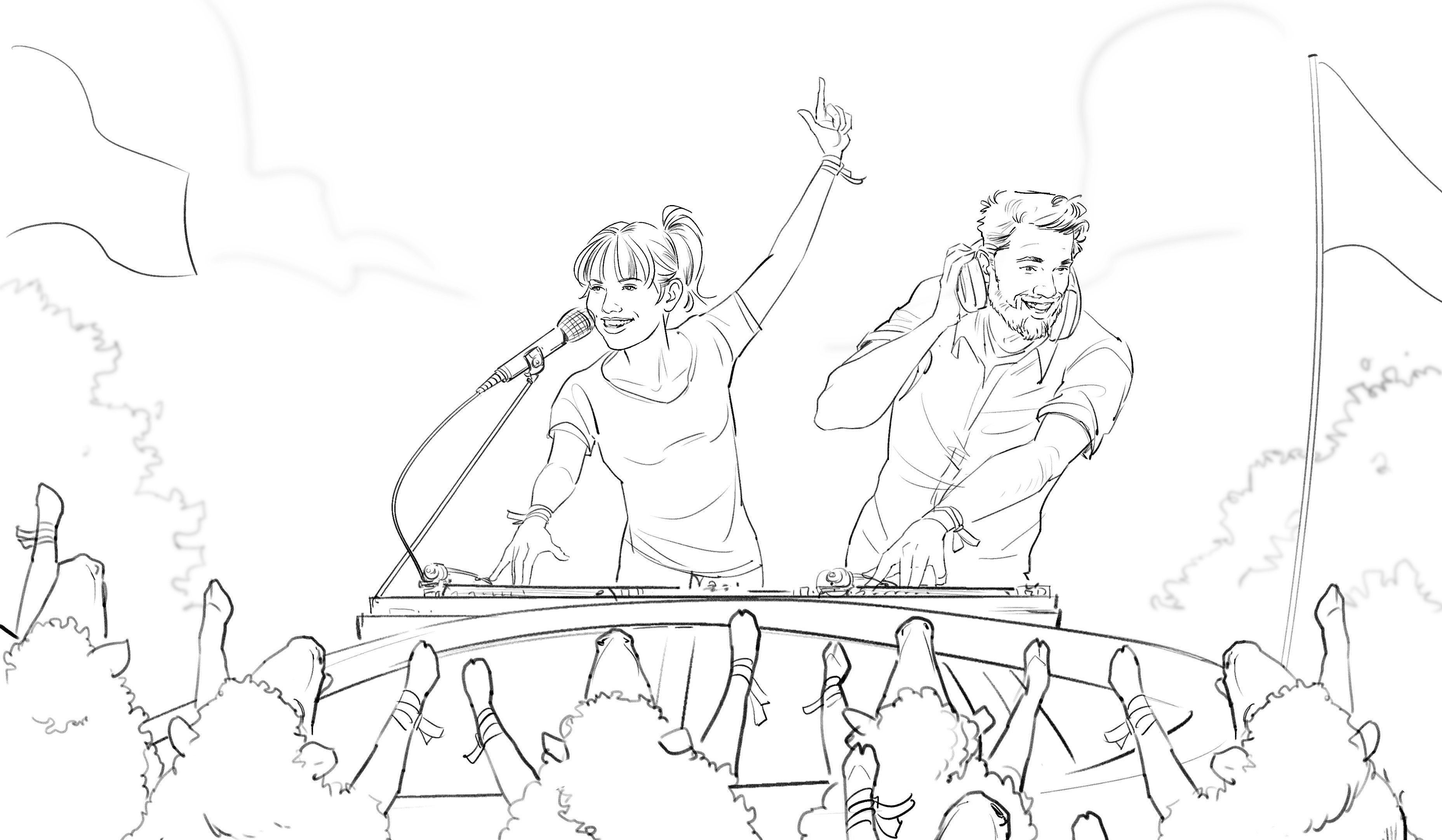
An illustrative approach works best for animatics. It allows audiences to focus on the story, creative idea, and flow of the narrative rather than becoming distracted by visual details.
We use AI to accelerate the artwork creation process, but only after the storyboard structure and rough scamps have been approved. AI then helps us create polished, engaging visuals that elevate the animatic while remaining flexible and concept driven. Key assets such as packaging, logos, and typography are added using Photoshop, and all characters and foreground elements are separated into layers so they can be animated effectively.
[Above: One animatic from a series of animatics we created for Sun Dishwashing Detergent's French Market Campaign. More here.]
4. Don't ignore continuity.
One of the most important factors of an animatic is continuity. Characters should remain consistent in age, clothing, proportions, and appearance. Backgrounds, props, and environments should also maintain continuity from shot to shot. AI can’t always achieve this. That’s why our artists use Photoshop or design software to address any inconsistencies that might occur.
5. Don't use AI-generated text, logos, or pack shots.
AI often struggles with typography and brand assets. Always add these manually using Photoshop or design software to ensure accuracy.
6. Don't assume AI will solve revisions.
Clients will always want changes! Our workflows allow artwork and scenes to be edited efficiently rather than relying on regenerating images every time feedback arrives.
Want AI used this considerately on your next animatic? Get in touch, let's talk it through.
[Above: A test animatic we were asked to do, based on a current TV campaign, to show our Ai capabilities]
There’s only room for a fraction of our portfolio online. If you’re after specifics, get in touch. We’ll create something just for you.
Get in touch